
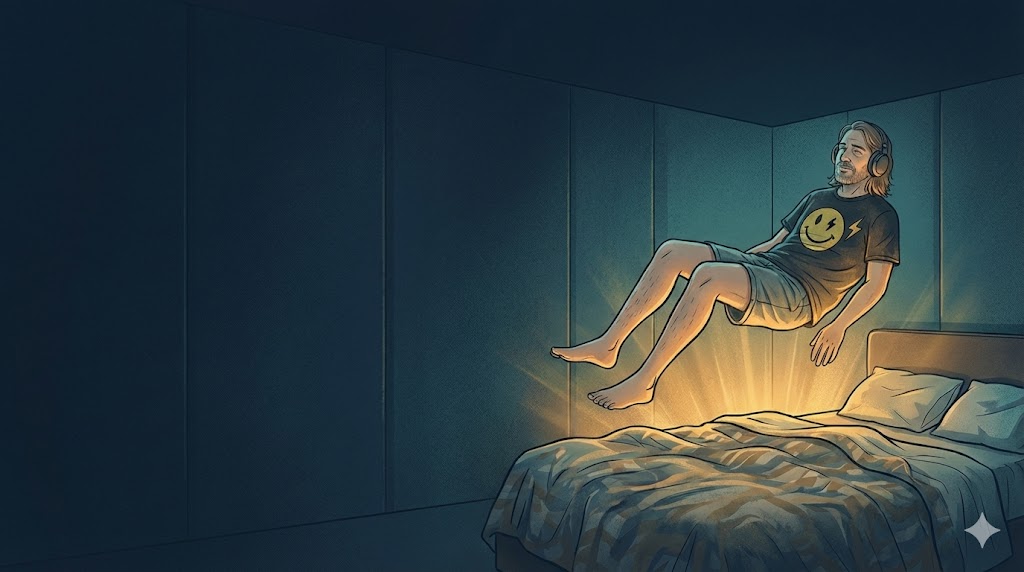
Let’s be honest with ourselves. We are exhausted.
This isn’t just the standard fatigue of middle age. We are facing a pervasive and escalating public health crisis: a chronic deficit in sleep quantity and quality. We treat sleep like a negotiable commodity, something to be traded for productivity or one more episode of a show we are too tired to watch. It is time to wake up to the reality that our sleeplessness is a critical biological failure with cascading effects on our hearts, brains, and bank accounts.
The "Hustle" Hangover
Unlike the generations before us who punched out at 5 PM, or the generations after us who prioritize mental health boundaries, Gen X internalized the "hustle culture" ethos. We wear our exhaustion like a badge of honor.
While Millennials and Gen Z view sleep as a fundamental health right, we often view it as a luxury. Data shows that Millennials sleep, on average, 22 minutes more per day than we do. While we roll our eyes at their obsession with "self-care," they might actually be onto something. Our conditioning to "tough it out" creates a psychological barrier where resting feels unproductive, triggering guilt that keeps our nervous systems in a state of high alert even when we try to sleep.
The Sandwich Squeeze
We are the archetypal "Sandwich Generation," but the filling is getting crushed. This isn't just a scheduling conflict; it is a source of chronic, vigilance-based stress.
The Triple Burden: We are caring for aging parents, raising children (often teenagers with their own complex needs), and trying to maintain our own careers.
Structural Vigilance: We lie awake waiting for the teenager to come home or the phone call from an aging parent’s doctor.
Financial Anxiety: Supporting adult children while funding aged care services is depleting our retirement savings, fueling the anxiety that stares back at us from the ceiling at 3 AM.
The Biological Reality Check
In our 20s, our bodies had the ability to bounce back from an all-nighter. That margin for error is gone. The midlife physiology of Gen X transforms poor sleep directly into accelerated disease affliction.
1. The Heart of the Matter Habitual short sleep is associated with a 45% greater odds of developing or dying from cardiovascular disease. When we don't sleep, our blood pressure fails to dip at night, keeping our hearts in a state of low-level "fight or flight".
2. The Alzheimer’s Window This is the most sobering realization. We are currently in the "pre-clinical window" for Alzheimer’s Disease. Deep sleep is when the brain’s glymphatic system washes away neurotoxic proteins like beta-amyloid. By sacrificing sleep now, we are literally preventing our brains from taking out the trash, increasing our risk of dementia in later years.
3. The Hormonal Shift For women, the collision of menopause with peak career demands is a "perfect storm" for insomnia. The drop in estrogen and progesterone triggers hot flushes and anxiety, fragmenting sleep. For men, "andropause" and the gradual decline of testosterone erode sleep efficiency and increase the risk of sleep apnea.
Strategies for Rebellion (And Sleep)
We raised ourselves to be independent and self-reliant, often returning to empty homes after school to manage our own time. We need to apply that same pragmatic, problem-solving independence to our sleep health.
1. Embrace the "Sleep Divorce"
Let’s rebrand this immediately. It is not a divorce; it is a "Dual Master Suite" strategy. Snoring, different schedules, and temperature wars are destroying our rest. Approximately 30% of marriages are impacted by sleep loss. Sleeping in separate rooms is a pragmatic architectural solution that saves relationships and protects health.
2. The "Right to Disconnect"
We spent years tethered to our Blackberries and then our iPhones, conditioned to answer emails at all hours. We need to leverage new "Right to Disconnect" laws where they exist, or enforce them personally where they don't. Disconnecting allows the autonomic nervous system to downregulate, dropping the cortisol levels that keep us wired.
3. Cognitive Behavioral Therapy for Insomnia (CBT-I)
Forget the sleeping pills. The clinical gold standard is CBT-I. It uses techniques like "Sleep Restriction" (limiting time in bed to build sleep pressure) and "Stimulus Control" (getting out of bed if you aren't asleep in 20 minutes). It’s tough, it’s counter-intuitive, and it works better than medication in the long run.
4. Domestic "Fair Play"
The "mental load" of managing a household is a recipe for bedtime rumination. The "Fair Play" method suggests that handing off a task means handing off the entire cognitive cycle: Conception, Planning, and Execution. You don't just tell your partner to "buy milk"; they need to notice the milk is low, put it on the list, and buy it. Clearing this type of thing from our checklist is essential for quieting the mind.
Conclusion: The Ultimate Investment
For Generation X, prioritizing sleep is not about being "soft." It is about survival. We are at a precarious intersection where the biological inevitabilities of aging collide with the peak intensity of social and economic demands.
We need to dismantle the "hustle" mentality we were raised on and replace it with a rigorous, evidence-based approach to recovery. Supporting our sleep is an investment in our longevity, our cognitive capital, and our ability to keep holding everything together.
So tonight, turn off the phone, ignore the emails, and go to bed. The world will still be there tomorrow. You just might be better equipped to handle it.