
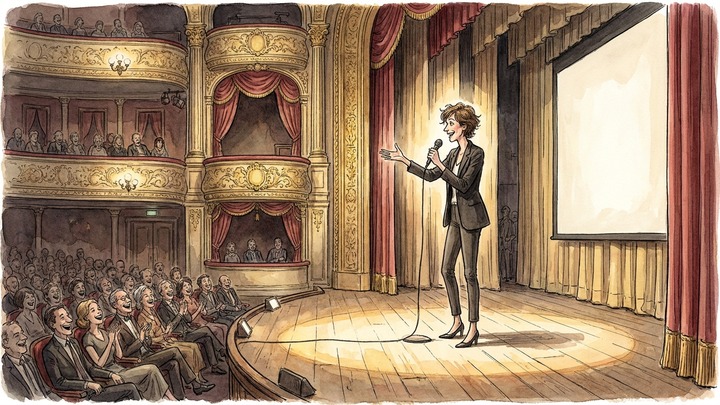
On a Friday night beneath the high, gilded ceilings of the State Theatre, Kitty Flanagan walked out to the centre of the stage and looked up at the ornate plasterwork. She told the crowd that she had spent months touring her show through smaller, less glamorous regional rooms just to get her material ready for a grand venue like this one. Above her hung a massive video screen to ensure the people in the back rows could catch every facial expression, though in a room with such intimate sightlines and crisp acoustics, the extra projection was hardly necessary. Her voice carried clearly into the stalls, brisk and conversational, like a sharp friend holding the attention of all at a dinner party.
Flanagan is a staple of Australian comedy and a voice of Generation X. Born in nineteen-seventy, she spent her twenties drifting through a brief stint in advertising before leaving to work behind bars and try her hand at open-mic nights in London. That long apprenticeship across British clubs and Australian television panel shows from Full Frontal to her hit sitcom Fisk has turned her into a remarkably relaxed performer. Her vocal delivery is distinctive, marked by a crisp cadence that speeds up when she is building an absurd image and drops into a dry, flat deadpan when she lands the punchline. She paces the stage acting out the indignities of daily life with a flick of the wrist or a sudden, wide-eyed stare.
The crowd filling the plush velvet seats was heavily populated by middle-aged women, an audience Flanagan understands instinctively. Yet her appeal is broad because she avoids the easy traps of contemporary stand-up. Unlike many of her peers, she does not rely on man-bashing or overly graphic descriptions of domestic relationships to force a laugh. Instead, she builds her set around shared human irritation. The overarching framework of the show, titled Glad Game, is borrowed from the nineteen-thirteen novel Pollyanna. In the book, an orphan girl tries to find something to be glad about in a bleak situation. Flanagan uses this premise to examine whether modern Australians can apply that same relentless optimism to the petty annoyances of twenty-first-century life.
Her targets are the small, baffling shifts in modern culture that quietly drive her generation mad. She dismantles the needy corporate habit of businesses demanding feedback after the most basic commercial transaction, and she mocks the rise of supposedly intelligent office buildings that make simple tasks. She turns a sceptical eye toward the self-serious corners of social media, the smugness of yoga culture, people who proudly announce themselves as empaths, and the strange uniformity of modern cosmetic surgery.
What elevates the hour from a simple list of grievances into a tight piece of theatre is her structural skill. Flanagan introduces seemingly minor jokes early in the night and loops them seamlessly back into later stories, creating a web of callbacks that rewards a paying-attention audience. In the middle of the performance, she took a quiet risk by steering the room toward the topic of immunisation. It is a subject that has fractured plenty of dinner tables in recent years, yet she handled it with a light, playful touch, finding the absurdity in the debate while subtly making it clear just how vital basic public health remains. It was a deft bit of stagecraft, proving that a seasoned comic can make a serious point without ever sounding like she is giving a lecture. By the time the house lights came up, she had made a convincing case that the best way to survive the irritations of the modern world is simply to laugh at them on a Friday night.