
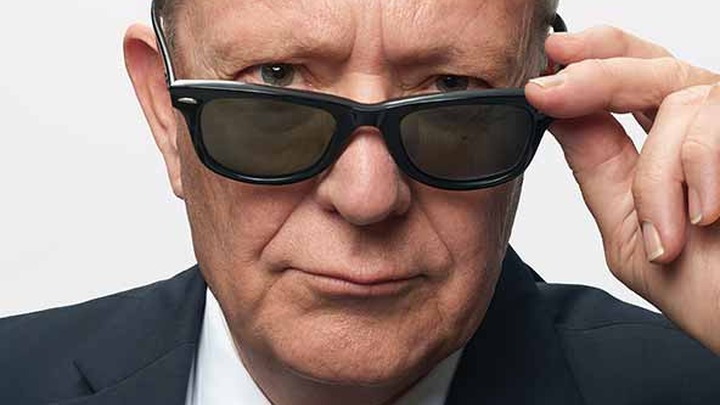
In the dimly lit confines of the Wharf One Theatre, a man in a sharp, Italian suit leans over the edge of the stage to interrogate a patron in the front row. He asks a question, listens for half a second, and then waves a hand in mock dismissal. The exchange is brief, pointed, and funny. It serves as an immediate lesson in why audience participation is usually a pointless exercise. Within moments, we are no longer watching an actor in a harbourside room. We are in the presence of Paul Keating, the twenty-fourth Prime Minister of Australia, brought to life by the satirist Jonathan Biggins.
This preview performance of "The Gospel According to Paul" marks a return for a show originally put together in 2019. Having last played in Sydney at the Opera House in June of 2024, the production now finds itself in a much tighter room for its 2026 run. The Wharf space lacks the generous proportions of the Opera House, and the staging feels slightly cramped by comparison. While the sound quality in the room is crisp and clear, the slide projector screen hanging at the back could have been brighter to make it a bit easier to see. Yet these physical limits fade away once Biggins hits his stride.
Born in 1960, Biggins sits right on the cusp of Generation X, and he has spent decades shaping the comedic voice of the country. He got his start in university revues before becoming a founding architect of the "Sydney Wharf Revue" alongside Drew Forsythe and Phillip Scott. His signature sound is a blend of rapid-fire political vernacular, razor-sharp mimicry, and traditional theater timing. For those in Generation X, who came of age during the economic reforms of the eighties and nineties, Keating was the defining political voice. Biggins captures that exact cadence, holding the audience captive for an hour and a half with a deeply convincing solo performance.
To keep a political play alive seven years after its premiere requires constant care. Biggins has updated the script for a 2026 audience, weaving in sharp observations about modern podcast interviews, the radio host Kyle Sandilands, and the submarine deal known as AUKUS. Neither side of politics escapes his gaze. He delivers a string of barbed jokes about the leadership of Anthony Albanese while saving plenty of venom for Pauline Hanson. He is also not scared to go to places that carry a bit more risk in the current climate, squeezing in a joke about Rolf Harris and another about Alan Jones that draw nervous, appreciative laughter from the crowd.
What elevates the show beyond mere stand-up is how Biggins manages the rhythm of the night. At several points, he breaks into song, trading parliamentary insults for soft-shoe shuffle and cabaret tunes. These musical numbers fit seamlessly with the rest of the performance, giving a welcome break from the heavy dialogue. Biggins is brilliant at showing the famous arrogance of Keating, strutting across the floorboards with his chin tilted high, before suddenly changing the pace to reveal a quieter, more sensible side of the man.
Beneath the laughs, the show asks serious questions about where the country is heading. In one memorable passage, Biggins offers an amusing yet important perspective on negative gearing and the capital gains tax, reminding the room of how policy actually shapes our daily lives. Even more striking is his critique of social media, which he calls the death of society and the end of public discourse. It is a sentiment that many in Generation X, who remember a world before smartphones and algorithms, would readily agree with. By looking back at an era of grand political vision, Biggins asks us to consider what we have lost in our rush toward digital noise. Everyone in Australia should see this show.