
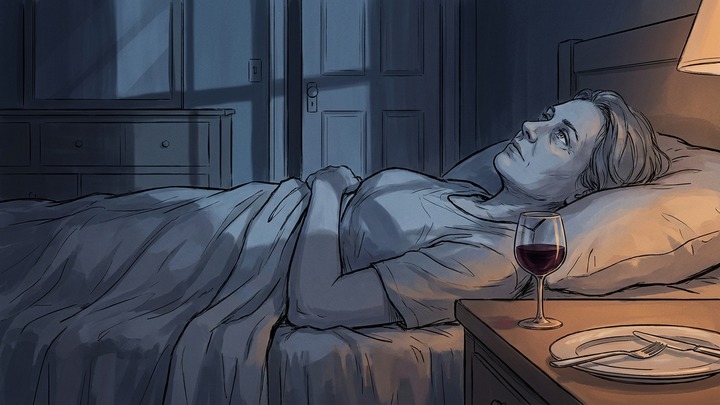
At two in the morning, in a dark bedroom, your eyes snap open. Four hours earlier, falling asleep after a late Thursday dinner and a glass of Shiraz had been effortless. Yet now your heart is thumping against your ribs, the sheets feel stifling, and your mind is racing through unpaid bills and unanswered emails. For decades, doctors treated this middle-of-the-night awakening as pure anxiety. Now, sleep researchers know we had cause and effect backward. Those racing thoughts at two in the morning are rarely the reason you wake up instead they are the physical aftershock of a midnight blood-sugar crash.
Human sleep happens in ninety-minute cycles, and the first four hours of the night are the most important. This early window is dominated by deep Stage three sleep, this is when the brain waves slows right down and the body shuts down for maintenance. Roughly seventy per cent of our daily growth hormone is released during these early hours to repair muscle and preserve bone, while the brain flushes out the cellular waste built up during the day.
Between the ages of forty-five and sixty, adults naturally lose up to half of their deep sleep capacity. When a sudden jolt wakes us around two in the morning, it cuts short whatever deep sleep remains and ruins the restorative dreaming sleep that should follow.
The problem is a clash between how a middle-aged body handles food after dark and the stress hormone cortisol. In a healthy daily rhythm, the sleep hormone melatonin rises as evening darkens, while cortisol drops to near zero before midnight so the nervous system can rest. Around five in the morning, cortisol gently climbs again to help us wake up.
By midlife, however, our ability to handle carbohydrates in the evening drops sharply. When melatonin rises at night, it signals the pancreas to slow down insulin production. Because of this, our bodies handle sugar thirty to forty per cent worse at eight in the evening than at eight in the morning. A bowl of pasta or dessert eaten at nine at night causes blood sugar to climb much higher and linger longer than it did at age twenty-five.
To clear this late flood of sugar, the middle-aged pancreas eventually dumps a heavy, delayed wave of insulin into the blood. By two in the morning, that lingering insulin drives blood sugar rapidly downward. Because the brain relies heavily on a steady trickle of blood sugar even while we sleep, a sudden drop sets off an internal alarm. To keep the brain from starving, the adrenal glands fire an emergency flare of adrenaline and cortisol to release stored sugar from the liver.
Adrenaline and cortisol are the primary chemicals of the fight-or-flight response. They shatter deep sleep, speed up the pulse, and heat up the body. Waking up in the dark with a bloodstream full of stress hormones, a startled brain immediately searches for a reason to explain the physical panic, latching onto the nearest work deadline or family worry.
Evening alcohol makes this trap much worse. A glass or two of wine acts as a mild sedative that helps people fall asleep quickly, making it a nightly ritual across Australian. Yet while the liver is busy clearing alcohol, it cannot properly regulate blood sugar. Four hours after the last sip of wine, right when the calories from dinner run out, blood sugar dips and the sedative wears off, jolting the sleeper awake with a dry mouth and a pounding heart.
Shifting midlife hormones narrow the margin for error even further. For women in their late forties and fifties, falling progesterone removes a natural calming signal in the brain, while shifting estrogen unsettles the body's internal thermostat. For men, testosterone drops by one to three per cent each year after forty. Because deep sleep is required to build morning testosterone, broken sleep locks men into a frustrating loop of fatigue and muscle loss. Meanwhile, adults naturally lose muscle mass every decade after thirty. Since muscle is the main storage tank for blood sugar, having less of it leaves the body with a smaller fuel reserve overnight.
According to the Sleep Health Foundation, nearly forty per cent of Australian adults suffer from poor sleep, costing the economy more than sixty-six billion dollars each year in lost productivity and medical bills. Too often, patients are handed sleeping pills that force unconsciousness while actually flattening the deep brain waves needed for real recovery.
However, the body responds remarkably fast to a few simple changes. The most reliable fix is finishing dinner at least three to four hours before bed. Stopping food by seven in the evening allows insulin to settle down before melatonin rises, preventing the midnight blood-sugar crash.
What goes on the plate matters just as much. Building dinner around a solid serving of protein, plenty of green vegetables, and healthy fats, while keeping white carbs modest, slows digestion and provides a steady trickle of fuel all night. Taking a tablespoon of apple cider vinegar in a glass of water before a starchy meal can also cut the resulting blood-sugar spike by up to thirty per cent.
For extra insurance before turning off the lamp, simple supplements work better than prescription sleeping pills. Three grams of the amino acid glycine taken before bed naturally drops core body temperature by half a degree, which helps the brain enter deep sleep, while magnesium glycinate helps quieten a restless nervous system.
Finally, protecting the night begins at dawn. Stepping outside for ten to fifteen minutes of morning sunlight shortly after waking sets a fourteen-hour internal timer for evening sleepiness, while regular strength training rebuilds the muscle that acts as a sponge for blood sugar.
The next time your eyes snap open in the dark at two in the morning, it helps to remember that the sudden sense of doom is mostly a chemical trick. The mortgage and the inbox have not grown any more dangerous since ten o'clock. Your brain is simply asking for steadier fuel, a quieter liver, and an earlier dinner.